Now on Amazon CloudWatch Omni: collaborative AI-powered observability for your applications | Amazon Web Services

Bridging the Observability Gap
The modern enterprise tech stack has become exponentially more intricate over the past decade. As organizations transition from monolithic applications to microservices, serverless functions, and complex AI agent workflows, the volume of telemetry data—logs, metrics, and traces—has ballooned. Engineering teams frequently find themselves trapped in a cycle of "dashboard fatigue," where they must manually curate hundreds of views, tune thresholds, and toggle between disparate tools to diagnose service disruptions.
Industry data suggests that the average Mean Time to Resolution (MTTR) for critical incidents remains high, primarily due to the "context gap"—the time lost when information is siloed across different teams and communication platforms like Slack or Jira. CloudWatch Omni is designed to mitigate this by acting as a central nervous system for cloud applications, abstracting away the underlying infrastructure to provide a unified view of system health.
Core Architecture and Functional Philosophy
At its core, CloudWatch Omni is built upon the OpenTelemetry standard. This allows for a vendor-agnostic approach to data ingestion, ensuring that existing telemetry streams flowing into CloudWatch are automatically available within the Omni environment without the need for cumbersome reconfiguration. Any workload instrumented with OpenTelemetry can seamlessly transmit data to the OpenTelemetry Protocol (OTLP) endpoint, providing a consistent foundation for monitoring.
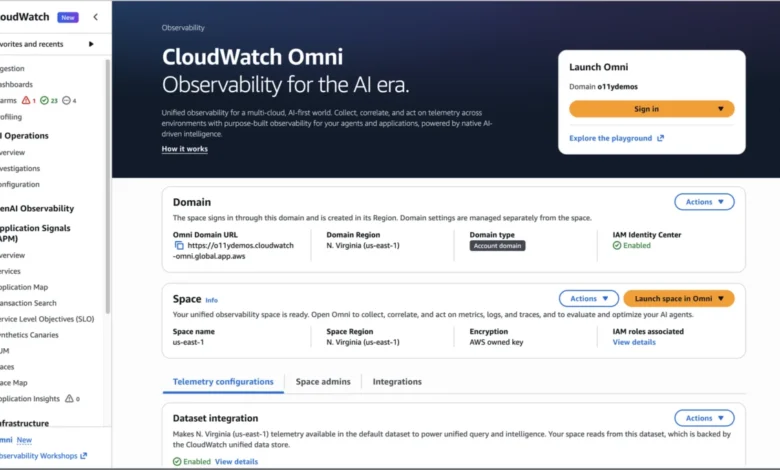
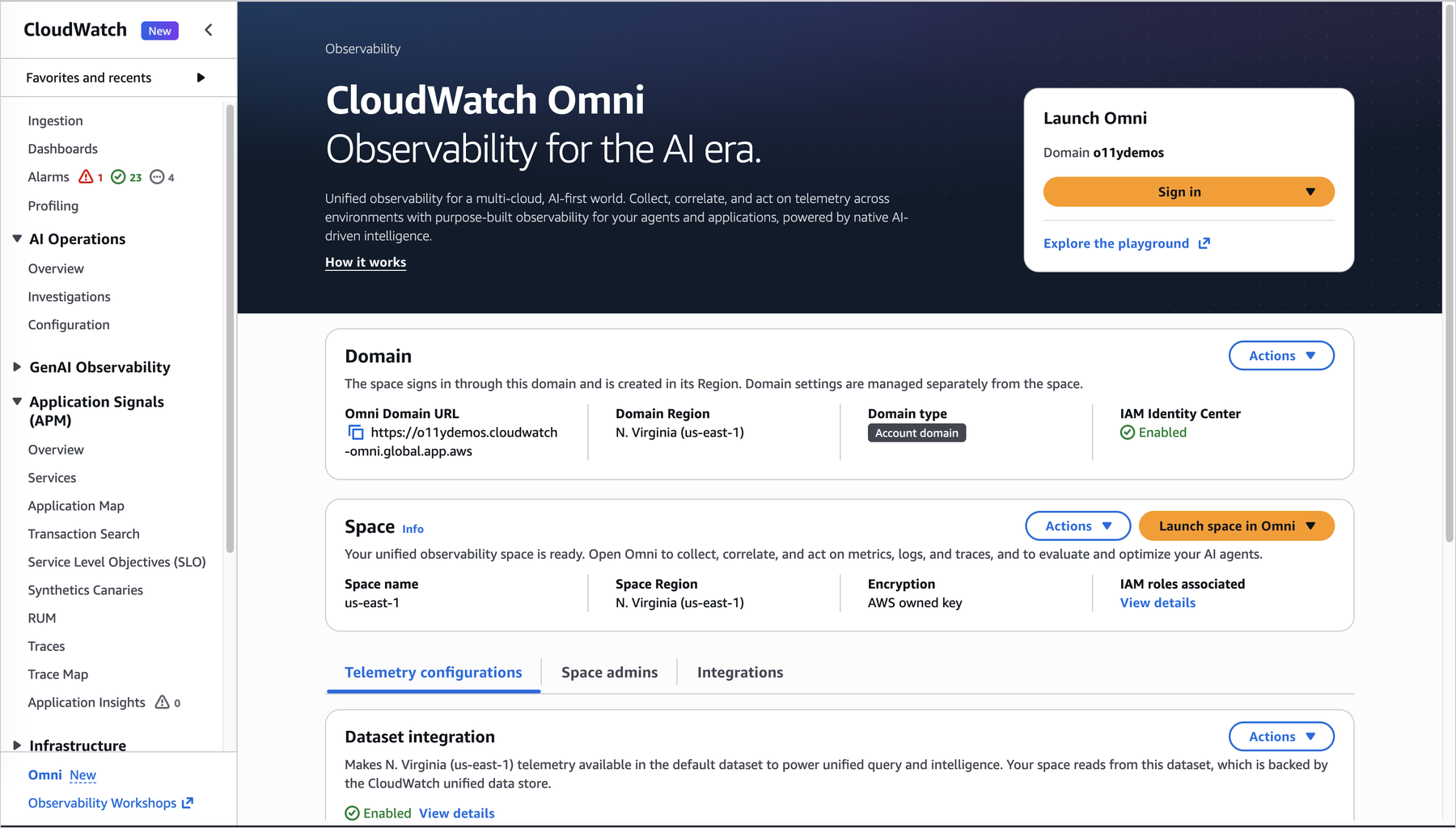
The platform introduces the concept of "Spaces," which serve as dedicated workspaces for individual teams. These spaces are accessible via a single URL, utilizing enterprise Single Sign-On (SSO) through AWS IAM Identity Center. By supporting providers like Okta and Microsoft Entra ID, Omni bypasses the traditional requirement for AWS Management Console access. This is a strategic move, as it democratizes observability data for non-infrastructure roles, such as product managers, developers, and data scientists, who may require visibility into system health without the administrative overhead of AWS console permissions.
AI-Driven Investigation with Amazon DevOps Agent
Perhaps the most transformative component of CloudWatch Omni is its deep integration with the Amazon DevOps Agent. Unlike traditional automated monitoring, which relies on static rules and pre-defined thresholds, the DevOps Agent utilizes the same real-time telemetry seen by human engineers to provide proactive analysis.

During an investigation session, the agent performs several critical functions:
- Correlation Analysis: It automatically identifies relationships between seemingly unrelated events, such as a deployment occurring 10 minutes prior to a latency spike in a downstream payment API.
- Root Cause Path Tracing: By analyzing the application dependency graph, the agent traces the flow of requests across services to isolate where failures originate.
- Session Continuity: When an incident escalates—for example, from an SRE to a database engineer—the agent maintains the full history of the investigation. The new participant joins the session with complete context, eliminating the need for exhaustive status updates or manual documentation of the incident’s progression.
Streamlining the Incident Workflow
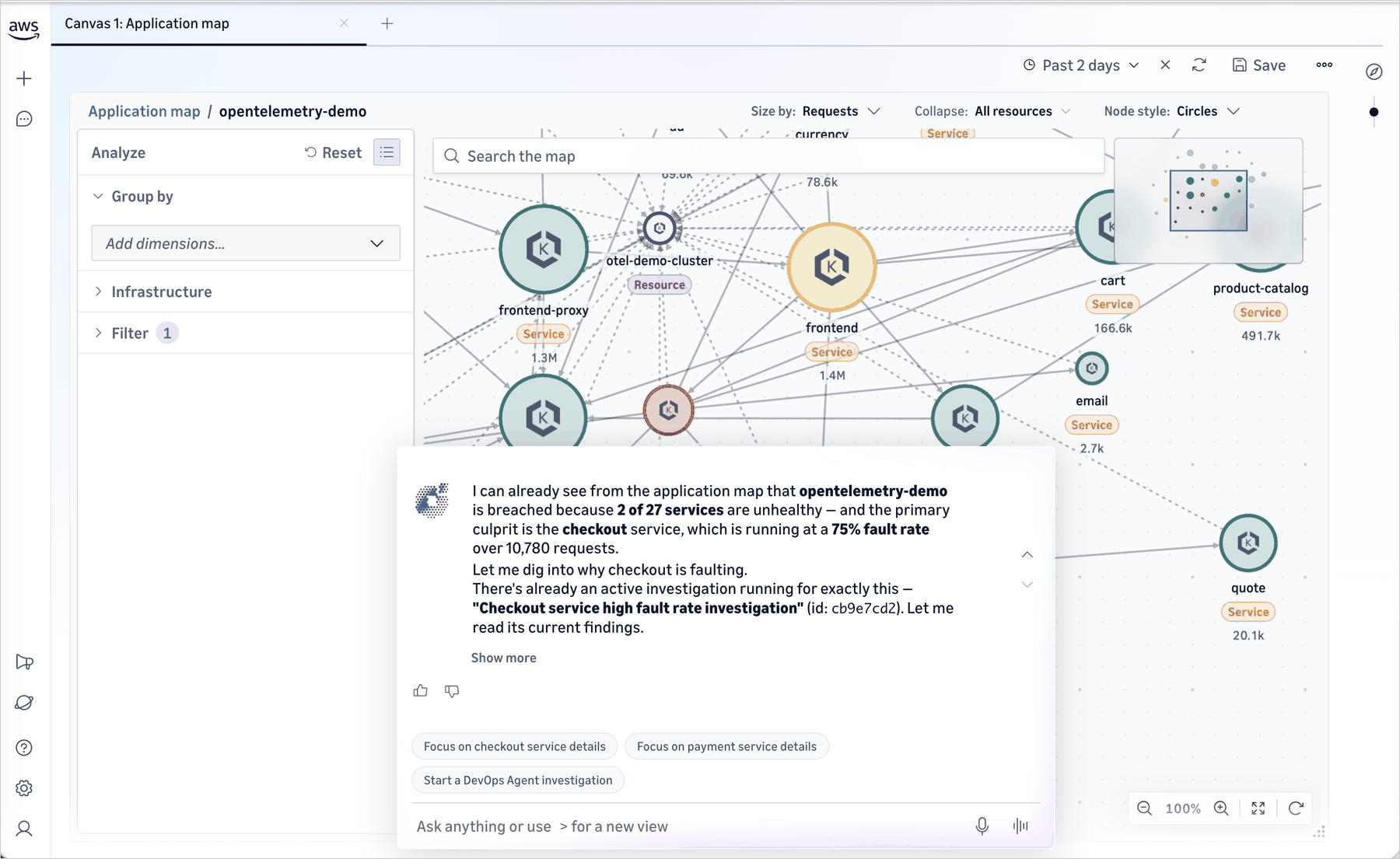
The practical application of CloudWatch Omni can be illustrated through a standard incident scenario. Consider a checkout service experiencing elevated error rates. In a traditional environment, engineers would manually inspect logs, check deployment pipelines, and verify database performance.
With CloudWatch Omni, an investigation session is triggered automatically. The platform presents the service topology, highlights the specific deployment that caused the deviation, and provides the DevOps Agent’s initial assessment. If the issue stems from an external dependency—such as an API gateway configuration change at a payment provider—the agent highlights this correlation. Because the entire investigation history is recorded automatically, the post-incident review (post-mortem) process becomes a byproduct of the resolution rather than a separate, time-consuming administrative task.
Evolution of the Observability Landscape
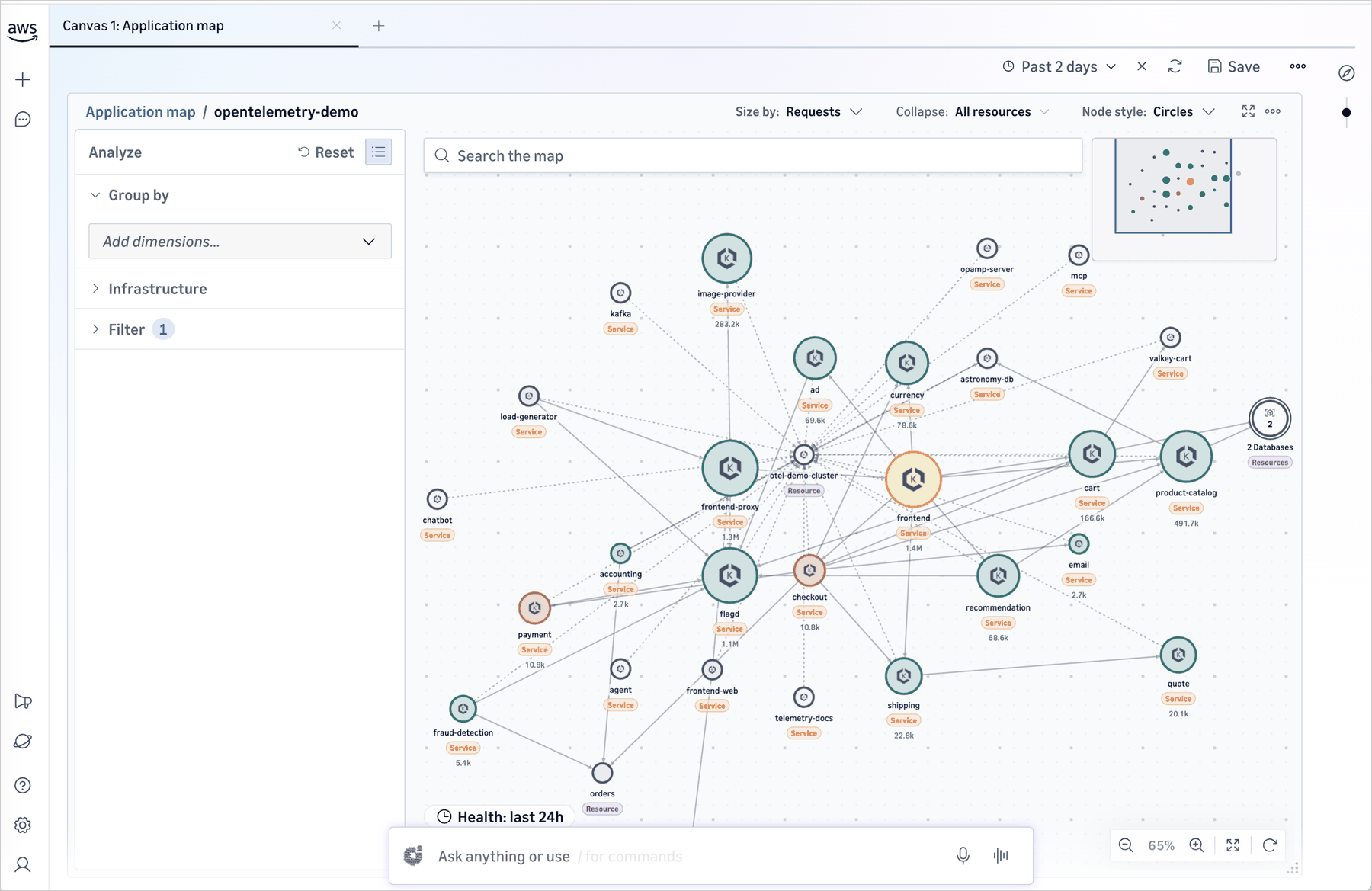
The introduction of CloudWatch Omni marks a transition in the maturity of cloud management. Historically, observability was reactive; administrators built dashboards and waited for alerts. Omni represents a shift toward "adaptive observability." The platform dynamically discovers services and maps dependencies as they evolve. When a new microservice is deployed, the application topology updates in real-time, and alarms are adjusted based on the declared availability targets and latency budgets of the team.
This is a response to the growing prevalence of generative AI and agentic workloads, which often exhibit non-deterministic behavior. Standard monitoring tools struggle to track the "reasoning paths" of AI agents. By providing purpose-built observability for these workloads—including trace exploration and evaluation frameworks—AWS is positioning Omni as the primary tool for the next generation of AI-native applications.
Implementation and Operational Readiness
For existing AWS customers, the onboarding process is streamlined to minimize friction. The "Try CloudWatch Omni" feature in the CloudWatch console allows administrators to provision a space within minutes. Because Omni relies on existing CloudWatch data, no data migration or movement is required.
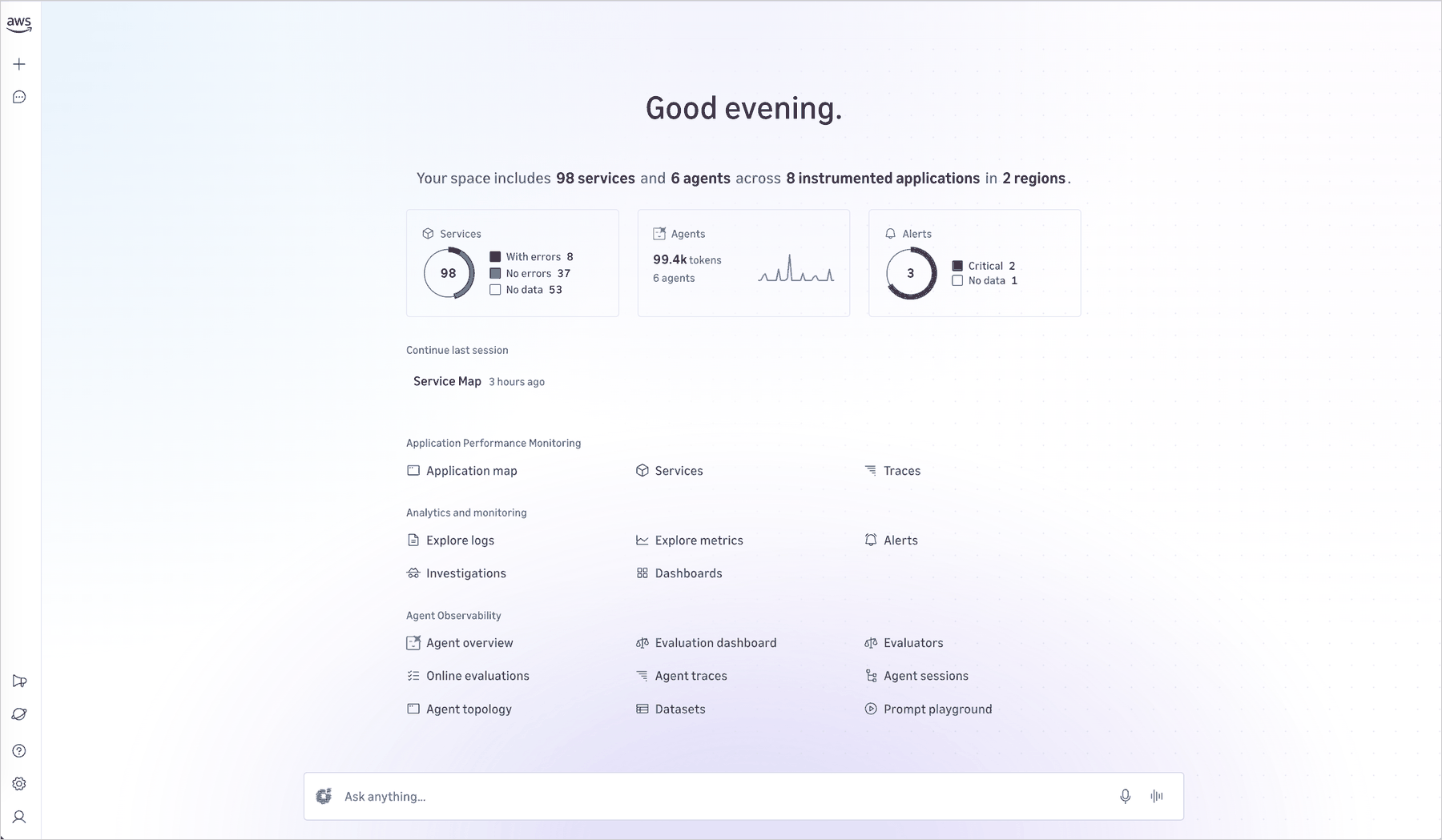
For large-scale, organization-wide deployments, administrators can configure custom domains and define granular access controls for different business units. For applications residing outside of AWS, the platform includes connectors that pull telemetry into the same centralized view. This "single pane of glass" approach is designed to satisfy the needs of hybrid-cloud enterprises that require a unified view of their entire ecosystem.
Market Implications
The launch of CloudWatch Omni signals a broader industry trend toward the consolidation of observability and AIOps (Artificial Intelligence for IT Operations). By integrating these capabilities directly into the cloud provider’s native toolset, AWS is challenging third-party observability providers that have long dominated the market through specialized dashboards and deep-tracing features.
Industry analysts observe that by removing the barrier to entry—specifically the requirement for AWS Console access—AWS is directly targeting the "developer experience" segment. If developers and SREs can resolve issues within their own collaborative space without interacting with the broader AWS management interface, the speed of innovation and incident response is likely to increase.
Future-Proofing Enterprise Operations
As businesses continue to scale their reliance on distributed systems, the ability to observe, interpret, and respond to technical issues with minimal latency is a competitive advantage. CloudWatch Omni is not merely a tool for monitoring; it is a mechanism for operational agility. By reducing the time spent on manual configuration and incident documentation, organizations can reallocate engineering talent toward product development and long-term feature iteration.
The platform’s focus on "declaring what matters" shifts the burden of maintenance from the human to the machine. By setting SLOs (Service Level Objectives) and availability targets, teams can allow the system to handle the complexities of threshold tuning. As the system evolves, Omni adapts, ensuring that observability remains consistent with the current state of the architecture.
Conclusion and Availability
Amazon CloudWatch Omni is currently available for all AWS customers. Pricing is integrated into the existing CloudWatch cost structure, and interested parties are encouraged to visit the official AWS CloudWatch portal for detailed documentation. As the platform matures, it is expected that AWS will continue to roll out deeper integrations with its AI-agent development tools, further cementing the role of automated observability in the software development lifecycle.
For organizations looking to transition from legacy, manual monitoring to a modern, AI-augmented approach, the deployment of CloudWatch Omni provides a clear path forward. It represents a significant step in the maturation of cloud-native operations, promising a future where the complexity of the system is matched by the intelligence of the tools used to manage it.